Life without Anorexia

My motto is
'Dont let the sadness of your past & the fear of your future ruin the happiness of your present'

My life at the moment is completely different to how it once was. I spent 5 years sick with anorexia nervosia and depression as well as struggling with self harm and overexercising. I spent 2 years in different treatment centres.
And since 2012 i have been declared healthy from my eating disorder.

I have been blogging for 7 years, and my whole journey is written in my posts. I now represent healthy and happiness. I want to show anyone struggling that it is possible to recover, no matter how hard it may seem.

I now blog about recovery, my life, veganism and positivity!

If you have any questions leave them in the comment section as i am much quicker at answering there, otherwise you can always send an email: [email protected]

Translate

Showing posts with label normal eating. Show all posts

Thursday, March 12, 2015

When food goes from enjoyment to anxiety

In todays society, it feels like half of the people, or younger generation anyway have a pretty fucked up relationship with food.
   Everyday, we are bombarded with images of thin models, and an ideal body. We see adds to lose weight. Foods we shouldn't eat. Foods that are bad. Foods that we should eat. New diets. Ways to exercise... bombarded with information, and not all the information is right.
   I've seen articles where its said, 'walk away 5kg in a week.', 'foods you should never eat again' 'Skip lunch and exercise'
   I dont even read those articles, because just the title makes me mad...

People know so little about nutrition. All they care about is calories... but that mind set is so wrong. I mean while i was sick, it went from eating 1200 calories scared me loads, to finally i couldnt even eat a whole apple because 80 calories was too much....
   
It feels like there is not really anything normal about the way people eat or think about food anymore... Because so many people, do have a sort of eating disorderd way of thinking about food.
   They think about losing weight, skipping carbs or fats. Putting restrictions on certain foods...getting anxiety after eating too much. But the difference i guess is that, its just phases. With an eating disorder, it goes from just a 'diet' or a 'phase' to something very secretive & alot of body hate.
  Also, the difference is, is that most eating disorders arent about the actual food... its about something else... so you control food, and the less you eat, the more you hate your body and your appearance.
  But with 'normal people' and they're unhealthy relationship with food, its more about wanting to look a certain way.

It feels like almost everyday, whether its at school, at the gym, on publis transport or something, i hear someone talking about some new diet they're started or how they want to lose weight. Or cut out a certain food group... I dont judge, but sometimes it feels like that is all people talk about. 
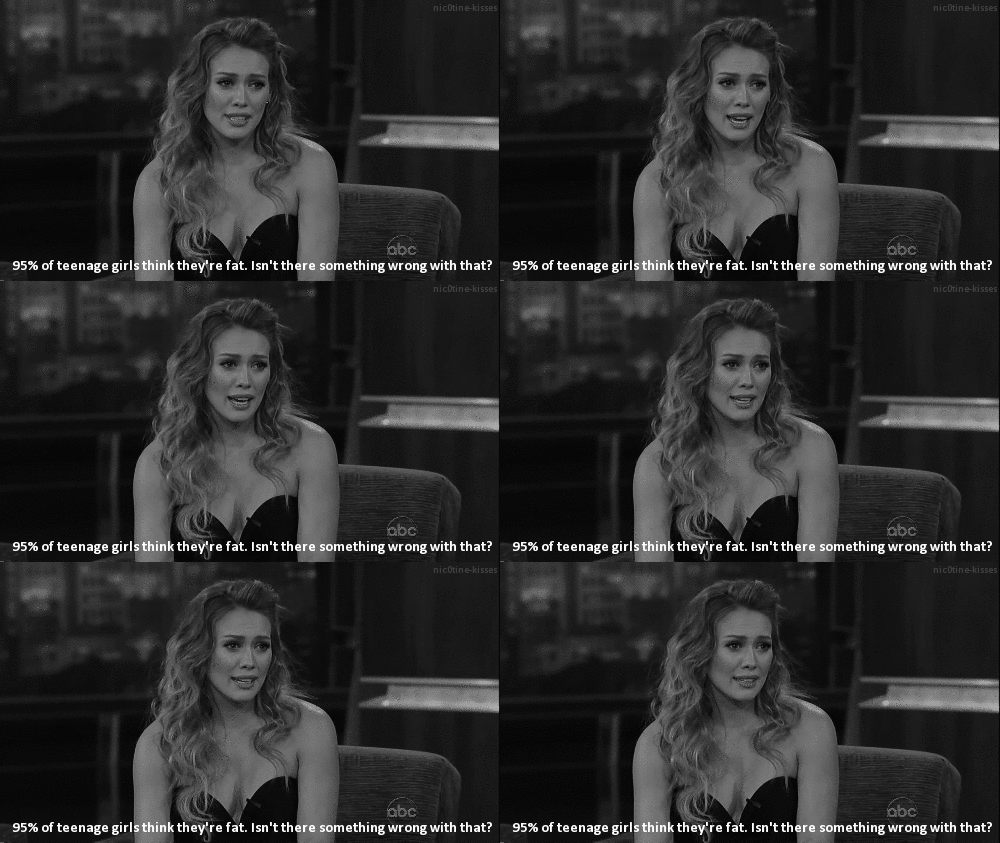
   Or when girls complain about how fat they are....  i mean, i have my days where i feel awful and fat. But i dont stand infront of the mirror in school and tell my friends about how fat i am... (Though i guess its almost hte same thing, when i write it on my blog? haha XD But thats different... sort of?)
imbringinghealthyback:

lostinmy-daydr3ams:

Thank you Hilary duff. I love you.

needed to reblog this again
  
I personally think a helthy relationship with food is when, you care about your body and give it good healthy food. I mean you dont have to be extremely health conscious, but know that you are eating good food. But can also eat junk food sometimes, because you know that it is ok. And as long as you are not overweight, then you know that eating junk food now and again is fine, and is not going to hurt you/be bad for you.
  You should eat food you enjoy, without anxiety. Making choices that are good for you, but also making unhealthier choices sometimes just because.....

Food is energy. And we need that energy. Whether we lie in bed all day, or sit at a desk all day, or are super active. We need that energy. And it doesnt matter if we ate loads the day before, or loads of junk food, we still need to eat the next day...
  Skipping meals is not healthy, and having anxiety after eating is not healthy either.
shutupand-squat:

here-i-come-fitness:

onefitmodel:

THAT IS SO FUCKED UP

yep, sounds right.

I’m part of that 60%

Also, counting calories is not healthy. Because you know what, you could eat one of those 100 snack bars,or a 99 calorie chips bag or you could eat a banana. And i can tell you, the banana is alot better for you and will give you more energy and fill you up more.
   And the same with, you could eat X amount of calories in chips, or X amount of calories in nuts.... and the nuts are alot healthier for you. And also to add, its ok to choose chips over nuts, or a 100 snack bar over a banana now and again!!! So even if there is a healthier option, you dont always have to choose it.
   Thats the difference between healthy & (healthy to the extreme of unhealthy!)
And also, people are so scared of calories.... they want to eat so low as possible, but i have learnt from my mistakes and know that that doesnt help anything.
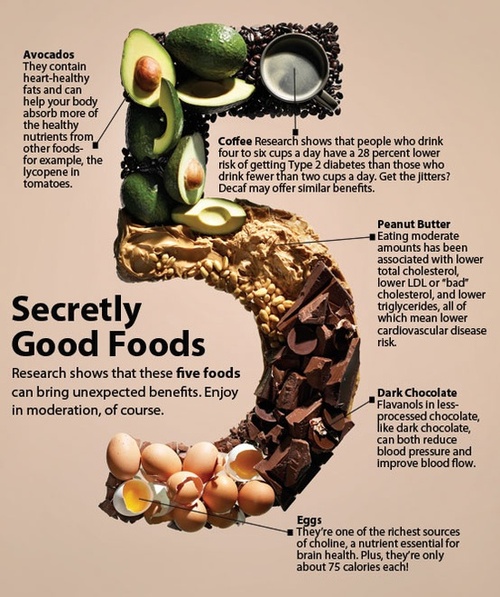
   Infact, the more i eat, the better i feel... physically and mentally!! Food like nuts, avocado, coconut oil, salmon etc, they may be high in calories, but they are good calories.

Food should be an enjoyment. Not a burden. Not somethign which we constantly think about, or worry about. I mean, i dont plan my meals... When i get hungry, i go to the fridge/pantry, see what we have and then make my decision... unless im craving something beforehand, and make that.
   But i dont spend my days wondering what i am going to eat, or planning my food. Or counting calories... i take it as it comes. Because some days im more hungry, other days im less hungry... and thats the balance of healthy!

So start enjoying food, and stop seeing food as weight gain. Because it isnt like that....
   People lack so much information, and are feed the wrong information from media!!!

shelleynibbs1de5:

If you love fitness follow this blog now!let-you-define-you:

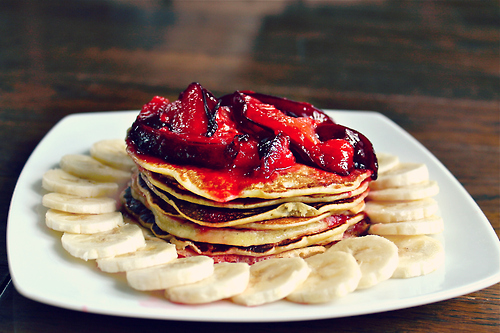
Strayed away from my usual fat free (a.k.a ED friendly) pancakes and tried out a new whole wheat pancake recipe! Definitely a new favourite- Whole wheat pancake stack with maple roasted plums, sliced banana, and I also had a chai tea latte. Happy birthday Canada!

Tuesday, September 30, 2014

How to be normal/eat normal?

How to eat normally?

This is a question which is very hard to answer. I have posts about intuitive eating which you can read here:

10 principles of intuitive eating **' Good post to read :)
Intuitive eating
Hunger and fullness
How to know if you have eaten enough


But otherwise, normal eating... its different from person to person. Some people are constantly on a diet or yoyo dieting. Others seem to have weird eating habits or being a very picky eater... but dont have an eating disorder. Others have allergies and intolerance's to certain foods. Some people like some food whilst others dont.... so everyone is different. Also the amount people need to eat.
  Some people can eat McDonalds everyday and eat lots of other things but dont gain weight at all, for others... eating chocolate too often leads to weight gain. That is all about DNA, genes, metabolism, body type, lifestyle etc so copying someone elses eating isnt the answer.
  You need to find what works for you.

This however brings me to my actual topic of this post... Spending time with friends and family and going out to eat with others is a good way of seeing how normal eating is. (As long as these people dont suffer with an ED or are on a diet). But then you can see... people order different things. They eat, they enjoy it. They should - hopefully-  not feel guilty about what they just ate.
  If you were to spend a whole day with people, or if you were to analyze how your friends and family eat you would see that some people eat little in the morning but eat a huge dinner and then eat things like chocolate and ice cream in the evenings. Others eat lots in the morning and for lunch and less in the evenings. Some people continuously snack throughout the day... some go and take handfuls of food as they pass the cabinets. Others are very structured with their eating and only eat 3 or 4 times a day... others eat 6-8 small meals per day.
 I.e everyone is different.

But seeing the careless, the free way of eating which normal and healthy people have can be very good for you who is struggling. To see your sister go take a glass of juice just like that. Or see your brother take an extra portion for dinner and then go take 2 cookies with milk after dinner. Or to see your dad or mum grab an apple or orange after lunch etc
   They dont over think or analyze every bite they take. They dont worry about the calories. At the end of the day they dont look at everything they ate, try to calculate their intake. 

Of course now a days, many people are using calorie counting apps or go to the gym to burn off that muffin they ate. So seeing actual healthy behaviour around food can be hard now a days but spending time with friends and family and healthy people can help give you an idea of what healthy and normal eating is.
  But also to show you the carefreeness... and you should learn to adapt some of that to your own lifestyle!!!


Saturday, September 20, 2014

Disordered eating times

Ive been asked about if it matters what time you eat food/meals.

If i put it this way, in the end of the day when it comes to weightloss, weight gain and maintenance. Its about the total calories consumed in the 24 hours (over a longer period of time) which matter. So if you look at it that way, then no... it doesnt matter. If you were to eat 2200 calories for breakfast and a snack then i mean you have your calorie intake for the day.

BUT..... I dont think thats the only way you should look at things. Because if you were to eat say 2000 calories for breakfast and a snack, that doesnt mean you shouldnt eat for the rest of the day... you still need food. Your body still needs energy. You will feel hungry again a few hours later and you still need to eat. Your body can cope with extra calories one day. However, if you are eating say 2000calories for breakfast everyday, then i wouldnt say that is very healthy.... You need to have balance with your food. Not eat everything at once.

 Also if you only eat a little amount during the day and then eat loads during the night that is not a good balance either. Think like this, say your body burns 1500 just being alive (i.e your BMR) but you need c.a 2000 just to maintain your weight, but then you only eat 600kcal from 7am-8pm then you are already at a minus of calories and your body will be so hungry that it can lead to binging during the evening because your body is crying out for food, so once you eat you can't control yourself.
   But its not a good balance because during the day is actually when your body needs the food... its during the day you are active, doing more things - usually. So its then that you need the extra food, but also giving your body food regularly every 2-4 hours is best. As it keeps your blood sugar stable and you always have energy. Its not about 'saving' calories, knowing that you will binge in the evening or thinking 'just in case'. It doesnt work that way, if you restrict during the day you are just making it more likely that you actually will binge during the evenings. But if you were to eat more during the day, then it wouldnt be as likely that you eat such huge amounts during the evening because your body actually has the energy it needs.

So try following a meal plan and eating regularly and ENOUGH during the whole day... from when you wake up to when you go to bed. Its good for breakfast, lunch and dinner to be around 300-500kcal and 2-3 snacks from 200-400 kcal.. (more or less, depending on your energy requirment... when i was at Mando i think my breakfast alone was around 700kcal) (IM SORRY FOR THE NUMBERS IF YOU FIND IT TRIGGERING, BUT ITS SUPPOSED TO BE HELPING....)

If you find that you dont have time to eat enough during the day or just cant fit in the right amount, then eat more calorie dense food. Eat nuts, avocado, add oil to food, nut butters, dried fruit etc is all good to eat or snack on to get the right energy amount.

As mentioned at first, i mean its about the total energy intake so if you eat 300kcal from 7am to 7pm and then eat 2000kcal at the evening, then you still have the right energy amount but its NOT a healthy eating plan or healthy eating. I would still consider it disordered eating.

So let go and change ALL of your weird eating patterns and habits!!

Saturday, April 26, 2014

What is normal eating?

This is a topic which i have written about many times before, but its definitely hard to know. When you are sick, no matter what ED you have, you forget what normal eating is.
  How much, when, what etc Normal people dont follow meal plans and they dont follow any rules either. There are no times when you should or shouldnt eat. Thats all up to you to decide. When you listen to your body - eat intuitavely, then every day is different. Somedays i eat loads, other days i eat less. I dont always eat the same amount of the same time each day. Somedays i eat 4 times a day other times i eat 7 times a day.

So what is normal eating? Its so hard to say, because what is normal/healthy for you, might be different for others. Its about listening to your body. One day you might crave loads of something and the other day crave something else.
  You might have periods where you barely eat any potatoes, and othertimes where potatoe is the main fopcus of your meal. I cant tell you what normal is....
 
Doctors or dieticians however might define normal eating as eating every 2-3 hours, and eating about 6 small meals a day. Which is best as it keeps your blood sugar from dropping, but for some they might prefer 4 big meals a day, and i cant say that that is wrong.

And as for WHAT to eat, and the AMOUNT, once again its so hard to say what is normal... I guess the best is to have a proper big breakfast, and then for lunch and dinner to have cooked meals with carbs, protein, healthy fats and vegetables.
   As for snacks.... i guess thats up to you. Some people just eat fruit as snacks, but me.... well i eat big snacks. Pancakes/crisp bread/egg/quark/oatmeal/chocolate/nuts/protein fluff/ protein bars/fruit/yoghurt etc etc (not all at once, but you know big snacks anyway!)

If you want to see my diets - and my meal plans while i was gaining weight click HERE
  ^^The calorie amount was specifically for my bodies needs and for gaining weight, but thats how (maybe a little less!!) a normal day should look... acccording to dieticians anyway!

I think the best while recovering is to follow a meal plan and then slowly begin to listen to your body.... stop measuring food and stop counting calories. Take more if you want, leave food if you are too full. Make a snack which YOU want, not whats on your meal plan etc etc
   Small steps towards intuitive eating, but it is a try and fail thing to find the balance and to eat enough.

But to answer the question of what is normal eating, i cant really tell you. Because what is normal for one person isnt the same as someone else!!

Monday, February 24, 2014

What is normal eating?

What is Normal Eating?

In examining disordered eating, it might be useful to consider what it means to practise ‘normal eating’. What is considered “normal” in terms of quantities and types of food consumed will vary considerably from person to person. Rather than referring to the consumption patterns a person adopts in relation to food, ‘normal eating’ refers to the attitude a person carries in their relationship with food.
Below are a few definitions accepted by Eating Disorders Victoria which define ‘normal eating’ in this context.
“Normal or natural eating is many things to many people. Not only is there variety from person to person, there is also enormous variety within each individual. It is normal or natural to eat more on some days and less on others, or to eat certain types of foods some of the time, just for the taste of it. It is normal to over-eat occasionally, and under-eat occasionally. It is normal or natural for women to have fluctuations in appetite and in craving for certain types of food as hormone levels vary during the course of the menstrual cycle. It is normal to eat less of the foods you enjoy the taste of now, because it’s okay to have them again another time. It is important to develop the balance between our nutritional knowledge and our natural instincts with regards to food. In other words, we need to get the balance right between using what we know and using how we feel.”
Dr. Rick Kausman, Australian medical doctor who has pioneered the non-dieting approach to weight management. Author of If Not Dieting, Then What?
“Normal eating is being able to eat when you are hungry and continue eating until you are satisfied. It is being able to choose food you like and eat it and truly get enough of it — not just stop eating because you think you should. Normal eating is being able to use some moderate constraint in your food selection to get the right food, but not being so restrictive that you miss out on pleasurable foods. In short, normal eating is flexible. It varies in response to your emotions, your schedule, your hunger, and your proximity to food.”
Ellyn Satter, R.D., A.C.S.W., Author of Child of Mine: Feeding with Love and Good Sense
“Normal eating includes the ingestion of healthy foods, the intake of a mixed and balanced diet that contains enough nutrients and calories to meet the body's needs, and a positive attitude about food (no labelling of foods as "good" or "bad," "healthy" or "fattening," which can lead to feelings of guilt and anxiety). Normal eating is related not only to health maintenance, but also to acceptable social behaviour, and is both flexible and pleasurable. It is important for people to understand that normal eating fluctuates; however, it should not fluctuate to the point of leading to a nutrient deficiency or excess weight loss or gain. Thoughts about desired foods and meal planning should be part of person’s daily life, but should not dominate it.”
Perieira, R.F. & Alvarenga, M. (2007). Disordered Eating: Identifying, Treating, Preventing and Differentiating it from Eating Disorders [Electronic Version]. Diabetes Spectrum, 5, 141-148.